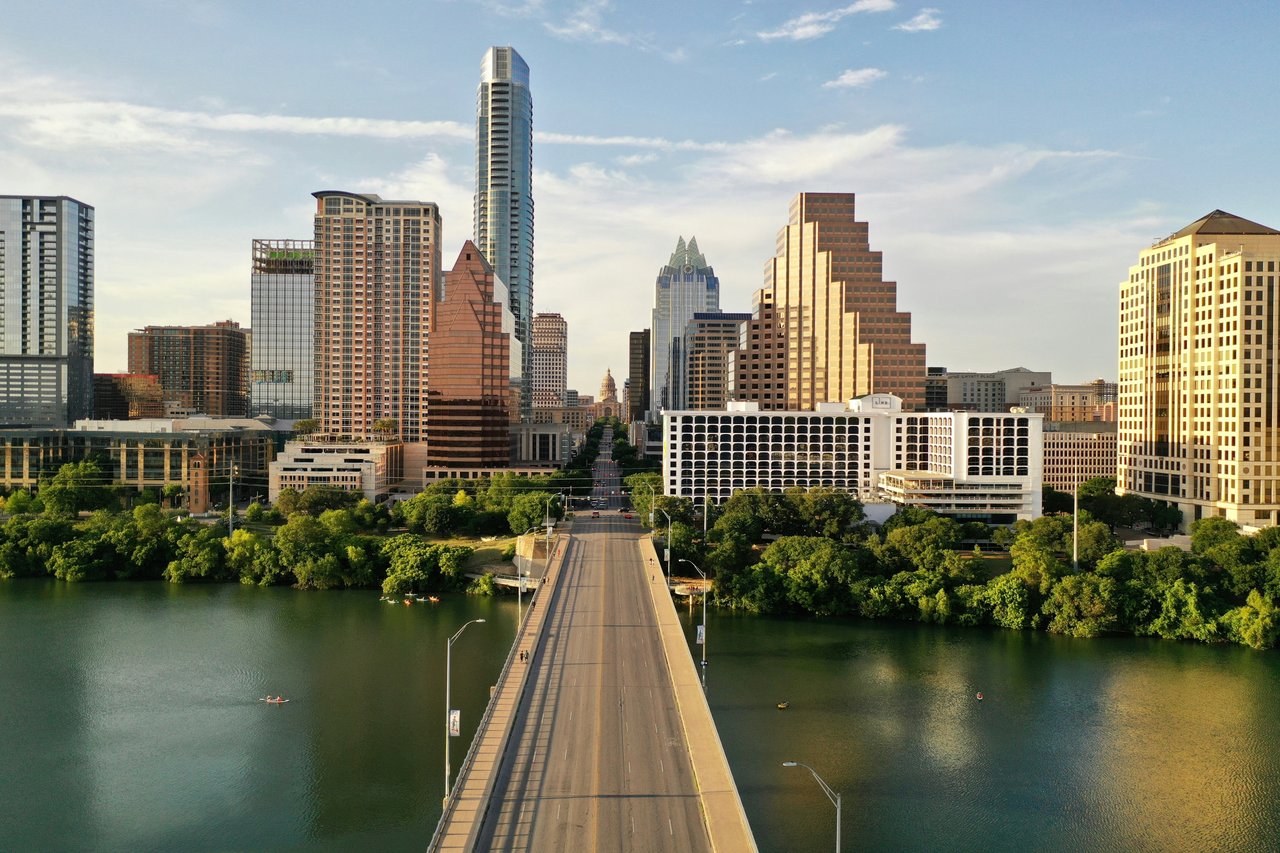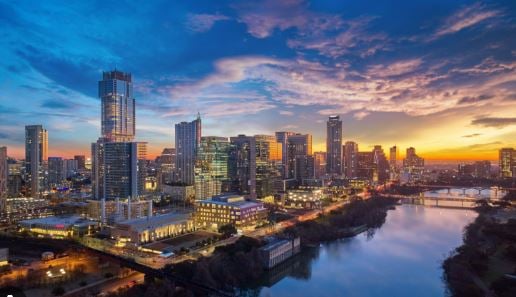
Austin, Texas is now known for its vibrant culture, live music, booming tech scene, and unmatched energy. It consistently ranks as one of the most desirable cities to live in the United States.
But Austin wasn’t always this way.
Long before the skyline, luxury condos, and tech headquarters, Austin was a small and uncertain settlement along the Colorado River called Waterloo. At the time, few could have predicted that this quiet outpost would become the capital of Texas—and eventually one of the most dynamic cities in the country.
What makes Austin unique is not just how much it has grown, but how intentionally it has evolved. Its history is filled with bold decisions, iconic landmarks, and people who believed in its potential long before the rest of the world did.

From Waterloo to Austin
Before Austin had its name, it was a small settlement called Waterloo with only a handful of residents living near Shoal Creek.
In 1839, everything changed when the Republic of Texas chose Waterloo as its capital. The town was renamed Austin in honor of Stephen F. Austin, known as the “Father of Texas.”
That decision instantly changed the city’s future. What was once a quiet settlement became the political heart of Texas, setting the foundation for long-term growth.
Austin’s story begins here: a small town reimagined into something much bigger.
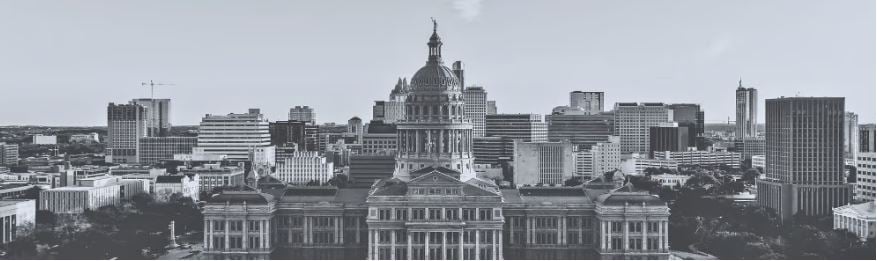
The Texas State Capitol and the Confidence to Grow
One of the most recognizable landmarks in Austin is the Texas State Capitol.
More than just a beautiful building, the Capitol represents confidence in Austin’s future and its role in Texas history.
The current Capitol building is actually the fourth version, after earlier structures were lost to fire or replaced as the city grew. Completed in 1888, it remains one of the largest state capitols in the United States.
More than just a government building, the Capitol became a symbol that Austin was here to stay.
Even today, Austin’s Capitol View Corridors protect sightlines to the building, ensuring that development respects the city’s historic identity.

The Governor’s Mansion and Austin’s Character
Just a few blocks away from the Capitol stands another important part of Austin’s history: the Texas Governor’s Mansion.
Completed in 1856, it is the oldest continuously occupied governor’s residence west of the Mississippi River.
While many historic government residences around the country feel distant or heavily guarded, the Governor’s Mansion reflects something different about Austin. It feels approachable and connected to the city around it.
That sense of accessibility has always been part of Austin’s personality.
Even as the city has modernized around it, the mansion remains a reminder of Austin’s long-standing roots.
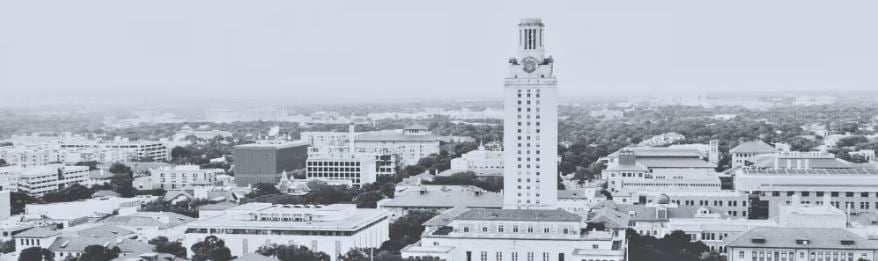
The University of Texas and the Transformation of Austin
Few institutions have influenced Austin more than the University of Texas.
When UT Austin opened in 1883, it began with just one building, eight professors, and a little over 200 students.
At the time, no one could have predicted how deeply the university would shape the future of the city.
Over the decades, UT Austin became much more than a school. It became an economic, cultural, and intellectual engine for the entire region.
It didn’t just grow with the city—it helped shape it. The university attracted students, research, innovation, and economic opportunity, fueling entire neighborhoods like Hyde Park and West Campus.
It also helped establish Austin’s identity as a city built on creativity, education, and innovation.

The Driskill Hotel: Believing in Austin Early
One of Austin’s most iconic buildings is The Driskill Hotel.
When The Driskill Hotel opened in 1886, Austin was still a developing city. Many questioned whether a luxury hotel of that scale made sense at the time.
But cattle baron Jesse Driskill believed in Austin’s future—and built it anyway.
Today, The Driskill is the oldest operating hotel in Austin and one of its most iconic landmarks. It stands as a reminder that many of the city’s defining moments began with bold decisions made before success was guaranteed.
People continue investing in Austin not only because of what the city is now, but because of what they believe it will become in the future.

Austin’s Famous Moonlight Towers
Austin is filled with unique landmarks, but few are as unusual as the Moonlight Towers.
Installed in the 1890s, these towers were designed to illuminate entire neighborhoods before modern streetlights became common.
At the time, the technology was innovative and ambitious. The towers cast light across large sections of the city and became part of Austin’s identity.
Today, Austin is home to the only remaining Moonlight Towers still standing in the world.
They are one of the clearest examples of Austin’s willingness to do things differently—creative, unconventional, and ahead of its time.
Austin Today: A City Built on Belief
From a small settlement called Waterloo to a nationally recognized city, Austin’s transformation has been shaped by people who believed in its future early.
That mindset still defines the city today.
Austin continues to attract people from all over the country—drawn by opportunity, lifestyle, culture, and a sense of possibility that’s hard to find elsewhere.
Its real estate market, neighborhoods, and economy all reflect that ongoing growth story.
But at its core, Austin remains what it has always been: a city shaped by vision, creativity, and bold investment in the future.
Why Austin Continues to Attract People Today
Every chapter of Austin’s history shares a common theme: people believed in the city before it became obvious.
And that belief is still what drives its growth today.
Whether someone is purchasing their first home, relocating for work, investing in property, or simply looking for a city with strong culture and opportunity, Austin continues to stand out.
The city offers a combination that is difficult to find elsewhere: economic growth, creativity, outdoor living, education, entertainment, and a strong sense of community.
And while Austin continues evolving, it has managed to hold onto the personality that makes it unique.
Its history can still be felt in the streets, neighborhoods, architecture, and local traditions that define the city.
Understanding Austin’s past also helps explain why so many people remain excited about its future.
Because the story of Austin has never just been about buildings or development.
It has always been about belief.
Belief in opportunity.
Belief in creativity.
Belief in growth.
And belief that this city could become something special long before the rest of the world recognized it.
That is what continues to make Austin one of the most exciting places to call home today.